Five Questions Vendors Beg You to Ask (and the One That Makes Them Light Up)
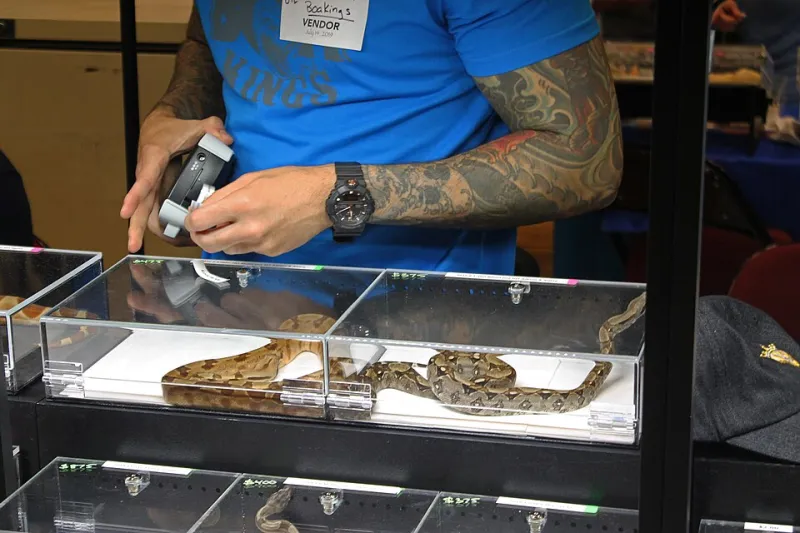
Photo: istolethetv, CC BY 2.0, via Wikimedia Commons
Walk any aisle at the Reptile Holiday Market and you'll hear the same three questions on repeat: How big does it get? What does it eat? Is it good with kids? All fair. But according to the folks behind the tables — some of whom have been hauling racks and tubs to Southwest expos for twenty years — the questions buyers aren't asking are the ones that matter most.
We grabbed five minutes with a handful of longtime vendors to build the reverse-FAQ nobody hands you at the door. Here's what they wish you'd ask.
"Can I see the parents or the hatch record?"
Ball python morphs are the classic impulse trap. A baby snake with a dazzling pattern looks like a lottery ticket, but genetics are where the real story lives.
"If somebody's selling a spider or a wobble-prone gene, they should tell you," says a breeder who's worked our market since the early days. "But a good buyer asks anyway. Ask what the parents look like. Ask if there are any neurological issues in the line. A seller who bristles at that question is telling you something."
The same goes for size. That adorable baby Argentine tegu will eventually outweigh your dog. Asking about adult dimensions before you fall in love is the single easiest way to avoid rehoming heartbreak.
"What's this animal's feeding history — and what exactly is it eating?"
This is the question vendors say separates hobbyists from tourists. A healthy juvenile should have a consistent, documented feeding record — dates, prey size, whether it struck live, frozen-thawed, or needed a little assist.
"If someone can't tell me when the animal last ate, I'd walk," one vendor told us flatly. "Reptiles fast, sure. But a seller should know the pattern."
Bonus points for asking about brand and type of feeder. Switching a picky eater from live to frozen-thawed at home is one of the most common first-week failures, and a good vendor will send you off with transition advice — some will even throw in the last couple of feeders for free.
"What's your return policy if this doesn't work out?"
Nobody wants to imagine it at the moment of purchase, but responsible sellers have a policy, and they're not shy about it. Most reputable vendors at our market offer a live-arrival guarantee and a short health window — often 24 to 72 hours — especially for animals shipped or driven long distances.
The question itself does something else, too: it signals you're a serious buyer. "When someone asks about aftercare and returns, I know they're not going to call me in three weeks from a gas station parking lot with regrets," one seller laughed.
"Who do I call if something goes wrong?"
Post-purchase support is the quiet dividing line between a vendor and a guy with a cardboard box of geckos. Veteran sellers keep their contact info on receipts, answer DMs for months after a show, and genuinely want updates.
Ask directly: Can I reach you if the humidity setup isn't working? If it refuses its first meal? The best vendors will say yes, hand you a card, and mean it. Some even run care-group chats for their past customers.
"What does this animal actually need that I haven't thought of?"
Open-ended, humble, and devastatingly effective. This is where vendors unload the stuff brochures skip — the UVB bulb that needs replacing every twelve months even if it still lights up, the crestie that needs taller rather than wider, the tortoise that will outlive your minivan.
"That question tells me someone's ready," one long-time vendor said. "Most people ask what an animal needs. The ones who ask what they haven't thought of are the ones who come back next year as keepers."
The question that makes sellers light up
Ask about the animal itself — not just its care. Where did the lineage come from? What's the breeder proud of? Vendors got into this because they love these animals, and nothing flips a five-minute transaction into a twenty-minute conversation faster than genuine curiosity. You'll walk away with better care intel, sometimes a discount, and occasionally a standing invitation to see the breeding operation.
Your printable expo checklist
Screenshot this or scribble it on a receipt — bring it to the next market:
- Genetics: Any known issues in the line? Can I see parents or photos?
- Adult size: Realistically, in years — not inches at sale?
- Feeding record: Last meal date, prey type, live vs. frozen-thawed?
- Health window: What's the guarantee, in writing?
- Returns: What happens if it doesn't work out — and who pays shipping?
- Contact: How do I reach you after the show?
- Hidden costs: Bulbs, supplements, feeders, upgrades — what am I missing?
- The animal's story: Where's it from, and what makes it special?
That's it. Eight lines, thirty seconds per table, and you'll shop like somebody who's done this before — even if it's your first time through the doors.
See you at the next market. The vendors will be ready for better questions.