Turns Out Your Bearded Dragon Has Opinions About Your Spotify Queue
Walk past booth 114 at this year's Reptile Holiday Market and you might catch a snippet of Bon Jovi bleeding out of a speaker no bigger than a pickle jar. The vendor swears her breeding pair of leopard geckos "get weird" if she plays anything mellow. Another breeder two aisles over looked at us like we'd asked to hold his retic without asking and said, flatly: "Silence. Always silence."
So which is it? We polled vendors, keepers, and readers across the Southwest to find out what's actually on in the reptile room — and along the way, we fell down a genuinely fascinating rabbit hole about how scales hear the world.
The Crowdsourced Reptile Room Radio
After a few weeks of collecting responses at the market, in DMs, and from our email list, a pattern emerged. Here's the 20-track "Reptile Room Radio" playlist, straight from the community:
- "Weightless" — Marconi Union (nominated by three separate ball python keepers, which tracks)
- Lo-fi hip hop beats to chill/study to — the unofficial anthem of leopard gecko rooms everywhere
- "Three Little Birds" — Bob Marley (a Tucson keeper plays it during feeding days "so they know it's breakfast")
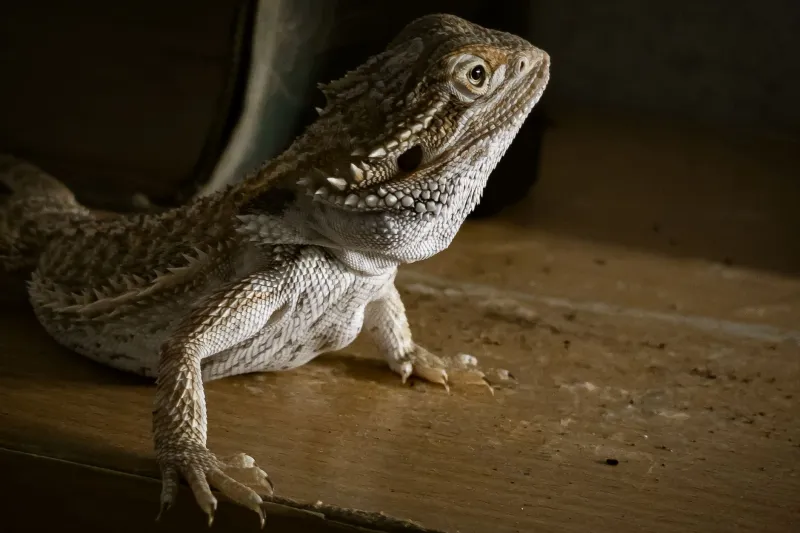
- Miles Davis, Kind of Blue — for the bearded dragon who "only tolerates jazz"
- Desert rain sounds playlists — shockingly popular with Uromastyx owners
- "Here Comes the Sun" — The Beatles
- Cumbia classics — one Phoenix breeder credits Selena with keeping her crestieds calm during shipping prep
- Redbone, "Come and Get Your Love"
- Anything by Khruangbin — the most-nominated artist overall
- NPR podcasts ("the dragons don't care, but I do," admitted one Mesa keeper)
- Pink Floyd, The Dark Side of the Moon
- Bossa nova compilations
- "Sweet Caroline" — Neil Diamond (we don't ask questions)
- Native American flute radio — a favorite among keepers in New Mexico
- Norah Jones, Come Away with Me
- Bluegrass instrumentals
- "Clair de Lune" — Debussy
- Hall & Oates, anything
- White noise machines — technically not a song, but it got so many votes we're counting it
- The sound of a cricket tub opening — write-in candidate and, honestly, the crowd favorite
What the Science Actually Says
Here's the surprise: some of this isn't just vibes. Reptiles don't have external ears the way mammals do, but most species have a tympanic membrane and a functioning inner ear. Lizards and snakes detect both airborne sound and substrate-borne vibration — and the vibration part is where things get interesting.
Studies on lizards have shown they respond to low-frequency vibrations traveling through the ground or through their enclosure furniture. That bass-heavy playlist might literally be rumbling through the vivarium glass. Meanwhile, research on bearded dragons suggests they can perceive airborne sound in roughly the same range we do, though they're most sensitive to lower frequencies.
What there's no good evidence for: reptiles having musical taste. Your dragon is not a Khruangbin head. What keepers are almost certainly observing is their own state changing — calmer movements, slower approaches, steadier hands — which the animals absolutely read and respond to.
"The snake doesn't care about Bon Jovi," one veteran vendor told us. "But the snake cares that you're not slamming tubs and hovering. If the music makes you chill, the animal gets a chill you."
The Case for Silence
Then there's the other camp. Breeders who run production rooms often go quiet on purpose, and their reasoning is practical, not philosophical: quiet rooms let you hear problems. A raspy breath, a scratch that shouldn't be there, a fan motor dying in the middle of a heat wave — silence is a biosecurity tool.
There's also the startle factor. Reptiles habituate to consistent background noise quickly, but sudden loud sounds — a dropped pan, a slammed door, a playlist that auto-plays a true-crime podcast — can spike stress in animals that are already running on instinct. Several vendors told us they keep hatchling rooms silent for exactly this reason.
Our Verdict: Volume Down, Vibes Up
If you want a soundtrack for your reptile room, go for it — just follow a few ground rules from the folks who do this for a living:
- Keep it low. If you can't hold a conversation over it, it's too loud for the animals.
- Cut the bass. Vibrations carry through racks and enclosures in ways you won't feel but your animals will.
- Consistency beats variety. A familiar ambient playlist beats a shuffle that occasionally screams.
- Watch the animal, not the algorithm. If feeding response drops or your snake goes on hunger strike after you rearranged the sound setup, change it back.
Come by the market this season and you'll hear it all — jazz booths, silent breeder rows, one guy playing whale sounds for his axolotls. However you score your reptile room, the animals will forgive you. Probably.
Got a track your animals secretly love? Drop it at the Reptile Room Radio booth at this year's market — the playlist grows every holiday season.